
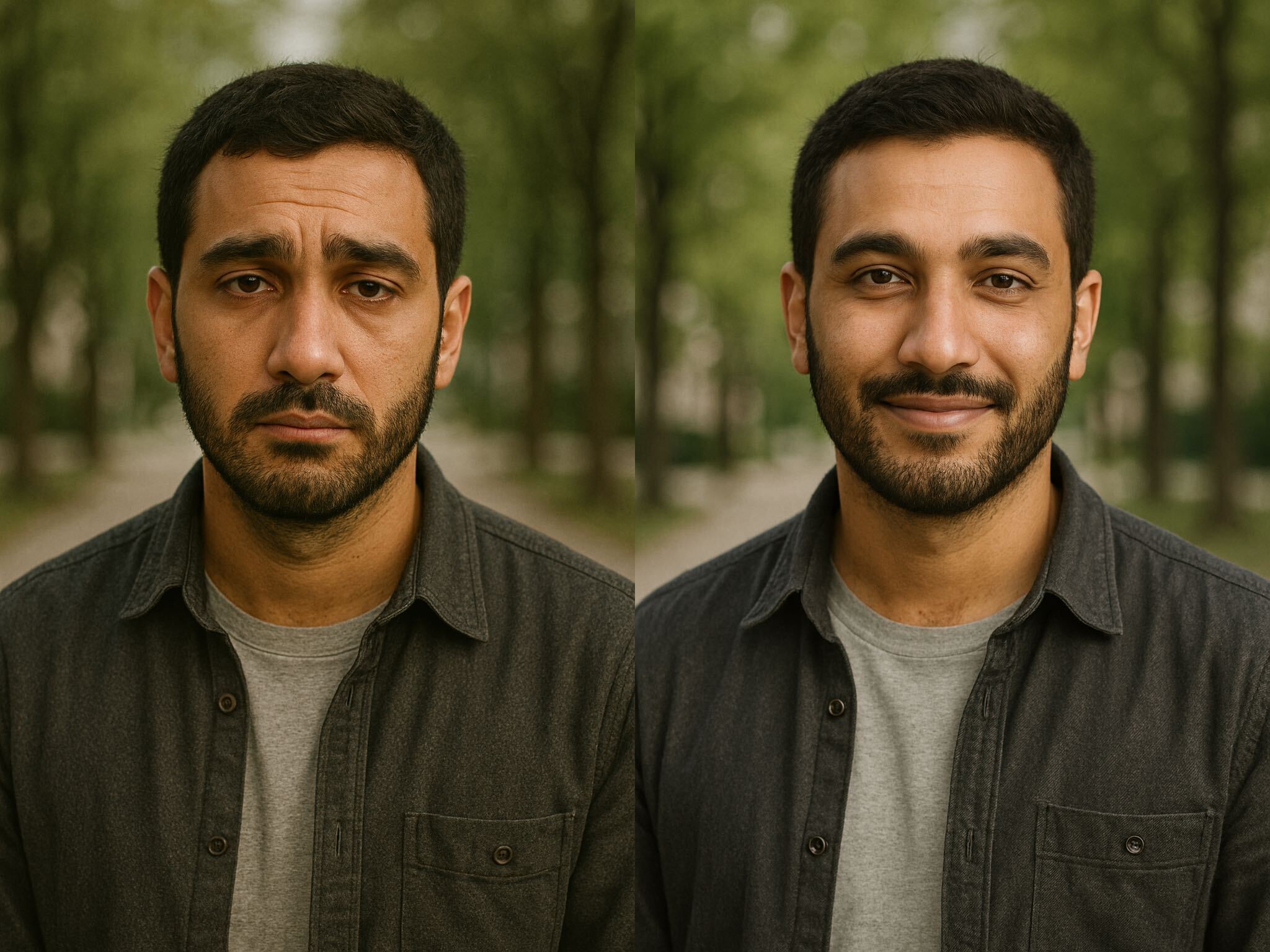
So… you got married, huh? It was all sweet, romantic, exciting just like in the movies. She was soft, radiant—a real embodiment of femininity. You felt like a man. Like a provider, a protector, a king in your own little castle. Remember?
But somewhere along the way… things shifted.
She’s more tired. More tense. More irritable. She nags. She criticizes. She no longer looks at you the way she used to. You feel like you’re walking on eggshells—afraid to say or do the wrong thing.
She started snapping at small things, questioning your decisions, challenging your tone. She became…someone else. And you?
You didn’t feel that much of a man in the house anymore.
You told yourself she must’ve been pretending in the beginning. That maybe she wasn’t as sweet as you thought. Maybe her upbringing wasn’t so great after all. Maybe it’s just hormones, or life, or the pressure of motherhood. You figured it’s just stress, or kids, or life.
You assumed it had nothing to do with you.
But here’s the truth no one tells you:
We become blind to our own behavioral shifts when we stop reflecting.
And the hard reality is this:
You may have played a bigger role in this dynamic than you think.
By softening too much, avoiding conflict, and trying to keep the peace, you may have handed over your leadership without even realizing it.
This isn’t to shame you.
This is to wake you up.
Maybe you’re still married, but not so happily anymore. Things aren’t terrible, but something feels off. You’re wondering, quietly or painfully: What’s happening between us? Can this be healed—or have we already drifted too far?
Or maybe your previous marriage is already behind you? You’ve been through divorce, had time to reflect, and now you’re quietly asking yourself: “What went wrong? What could I do differently next time?”
Because healing is not just about moving on—it’s about rising stronger and wiser.
This journey of reclaiming leadership begins even before the next chapter starts.
Because being a kind man is not the same as being a leader.
Being gentle does not mean being passive.
And being respected requires more than just being liked.
Especially, if you aim to be respected by your Lord.
In fact, we can back that one up with an authentic hadith Aisha reported: The Messenger of Allah, peace and blessings be upon him, said, “Whoever seeks the pleasure of Allah by the displeasure of people, Allah will suffice him against the people. Whoever seeks the pleasure of people by the displeasure of Allah, Allah will leave him to the patronage of the people.”
Source: Sunan al-Tirmidhī 2414
Grade: Sahih (authentic) according to Al-Albani
So, you’re not broken, and you’re not weak. You just need to remember who you are — and how Allah designed you to lead.
This is a call back to prophetic leadership — the kind that’s rooted in mercy and strength.
This is for Amir — and every gentle soul who’s ready to rise.
Am I Too Soft to Lead?
In a world that often equates strength with dominance and leadership with loud authority, Amir—the kind-hearted, soft-spoken Muslim man—wonders: Can I be strong without being harsh? Can I lead my family with authority without losing my gentle nature?
The answer, dear Amir, is not only yes—it is the sunnah.
The Prophetic Model: Power Balanced With Compassion
Rasulullah ﷺ was the most powerful man of his time. A leader of nations, a commander in battle, a judge of disputes, and a husband and father—yet those closest to him described him with words like gentle, kind, merciful, and approachable.
He ﷺ never raised his voice unnecessarily, never ruled his household with fear, and never belittled those under his care. But make no mistake—his strength was unquestionable. His decisiveness, his discipline in worship, and his unwavering clarity in mission made him the ultimate example of balanced leadership.
When Aisha (RA) was asked about his character, she said: “His character was the Qur’an.” (Muslim)
The Qur’an speaks of strength with humility, of firmness in values but gentleness in behavior:
“And lower your wing to the believers who follow you.” (Qur’an 26:215)
“And speak to people kindly.” (Qur’an 2:83)
From Gentleness to Growth: You’re Not Too Kind to Lead
Amir, your gentleness is not your weakness—it’s your gift. But gifts must be used with purpose. You do not need to abandon your kindness to be a leader. You need to anchor it with conviction.
Take the example of Abu Bakr (RA)—known for his tenderness, yet firm when truth was threatened. After the Prophet ﷺ passed away, the Ummah was shaken. Some tribes refused to pay zakat. In that moment of crisis, Abu Bakr said with fierce resolve:
“By Allah, if they withhold even a rope they used to give in zakat, I will fight them.”
His companions were shocked at his firmness—but he was right. He understood that leadership sometimes requires standing firm, not for ego, but for principle. And his strength was magnified, not diminished, by his compassion.
Leadership Is an Amanah, Not a Personality Trait
You don’t need to be loud or intimidating to lead. You need clarity, consistency, and courage. You need to embrace your role as the qawwam—the caretaker and protector—not with force, but with responsibility. Allah says:
“Men are caretakers over women by what Allah has given one over the other and what they spend from their wealth…” (Qur’an 4:34)
Caretaking is not dictatorship. It is accountability before Allah. It is having the strength to say “no” when needed, the wisdom to guide with calmness, and the patience to lead by example.
What Does Strength Look Like for You?
• Strength is consistency in Salah even when you’re tired.
• Strength is saying “I was wrong” to your wife or children without shame.
• Strength is setting boundaries in your home that protect its spiritual health.
• Strength is deciding what is right even when others hesitate.
• Strength is leading your family in Qur’an, in goals, in vision—even if your voice trembles.
You Are Not Alone in This Path
Amir, your yearning to lead with integrity, to be a strong yet merciful father and husband, is not just noble—it is urgent. The world needs more men like you who are willing to embody the full sunnah—not just the warrior or the ascetic, but the complete man: gentle and strong, kind and commanding, loved and respected.
Start with small, decisive actions:
• Hold family meetings to set shared goals.
• Lead your children in simple du’as and reflect with them.
• Speak gently, but decide firmly.
• Wake up for Fajr consistently—strength starts in the unseen hours.
Gentle Leadership Is Prophetic Leadership
Remember, Rasulullah ﷺ led his household with mercy, but never passivity. He taught, corrected, laughed, disciplined, listened, and guided. He was never a tyrant, but never unclear.
You, Amir, are not falling short because of your kindness. You’re being called to rise—to pair that kindness with principled power, intentionality, and decisiveness.
“Indeed, in the Messenger of Allah you have an excellent example…” (Qur’an 33:21)
Psychology of Leadership: Why Your Family Needs You to Be Clear and Firm
Modern psychology confirms what the Sunnah already teaches: families thrive on secure leadership. Not domination. Not emotional withdrawal. But calm, clear, masculine presence.
Men like Amir often hesitate to assert themselves because they fear being harsh. But what often happens instead is something much worse — they begin to disappear. They become overly accommodating, passive, or uncertain, thinking this is what kindness looks like.
In the short term, this might avoid conflict.
In the long term, it creates emotional erosion — especially in the marriage.
Clinical psychologists and marriage therapists often point to a dynamic called “polarization collapse” — when the masculine energy in the relationship weakens, the feminine energy has to overcompensate.
The wife starts making decisions, enforcing discipline, and leading the emotional tone of the home — even if she doesn’t want to. And eventually, that imbalance leads to:
• Resentment
• Burnout
• Loss of attraction
• A breakdown in trust and romantic polarity
From a Wife’s Perspective: “Please, Lead Me With Strength.”
Let’s hear this from the voice of a woman, living in the West:
“I don’t want to be the man in the relationship. I want to relax into being feminine, soft, and nurturing. But I can only do that when I feel safe—emotionally and spiritually. If my husband can’t make decisions, avoids taking initiative, or constantly second-guesses himself, I start to feel like I’m alone. And eventually, I lose the desire to be soft toward him. I become tired, irritated, and worst of all… disconnected.”
In healthy relationships, the woman’s femininity flourishes when her husband embodies masculine clarity, decisiveness, and inner strength. That doesn’t mean barking orders or controlling everything. It means:
• Taking initiative
• Holding emotional ground
• Protecting the spiritual atmosphere of the home
• Saying “no” when necessary
• Staying consistent in your principles, not reacting to moods
And sometimes, yes — it means risking short-term discomfort (like disagreement or tears) to protect long-term trust.
Because if you don’t lead… someone will. And the moment your wife feels she has to carry both her role and yours — love turns into duty, and duty becomes exhaustion.
Avoid Becoming “Nice” at the Cost of Being Respected
Let’s speak plainly for a moment.
You can be so eager to please that you forget your role.
You can be so afraid of being controlling that you become controlled.
You can be so gentle that you stop being trusted.
And no woman — not even the sweetest, most loving wife — can fall deeply in love with a man she doesn’t trust to lead.
If you start adapting your behavior based on fear or approval, your wife may not even realize it at first — but over time, she will feel it in her bones, and it will change the way she looks at you.
So don’t aim to be a “nice guy.”
Be a kind man with a backbone.
Mercy and Masculinity Go Together
Rasulullah ﷺ cried in prayer and laughed with his family. He also stood firm when truth was at stake and never allowed the people around him to live without direction. That’s the balance we need.
Amir, your family doesn’t want you to be a dictator.
But they do want a man who can:
• Make the call when it counts
• Protect the home spiritually and emotionally
• Be lovingly immovable when values are on the line
• Stay steady when storms come
That’s not toxic. That’s masculine mercy.
And it’s deeply attractive—to your wife, your children, and your Lord.
Your Next Step
Join a community of men like you—seek structured programs that blend Islamic wisdom with practical tools. Find mentors, study the lives of the Sahaba, and start tracking your own leadership behaviors.
You’re not too soft to lead.
You’re just right to lead well.
Because the best leaders, in the eyes of Allah, are those who carry both strength and mercy—just like our beloved Prophet ﷺ.
Written for Amir—and all gentle leaders out there.
And yes… Amir’s doing just fine.
Believe it or not, the Amir in this story did get his act together.
He stopped avoiding hard conversations, started leading with clarity, and finally stepped into the role Allah designed for him—not with ego, but with intention.
Today, his marriage isn’t just surviving… it’s thriving. There’s more respect, more laughter, and yes—even that look in her eyes came back.
No, it’s not perfect. But it’s real. And rooted. And we couldn’t be happier for him.
Because when a man leads with strength and mercy, the whole home breathes easier.
Here’s to you, Amir. And every gentle leader ready to rise.
While Amir*—the man we’re addressing in this article—is fictional, his experience represents a very real inner conflict that many kind-hearted Muslim men face today. In a world that often blurs the lines between equality and sameness, many men are left unsure how to lead without being labeled controlling, or how to be strong without being harsh. This article isn’t a rejection of mutual respect or emotional intelligence—it’s a reminder that masculine leadership, rooted in mercy, is not only part of our fitrah, it’s part of our faith.
*Amir means leader in arabic.
Enjoyed this article or felt moved by its message? Stay connected for more thought-provoking content! Get ready for inspiring stories, expert tips, and new insights on living a balanced and fulfilling life. Subscribe now to receive these valuable articles delivered directly to your inbox! Have an inspiring day, and keep becoming your best self!
Image: Chat GPT
Leave a Reply