
In an age where everything is quantified — steps walked, meals tracked, likes received, and bank accounts compared — where smartwatches, rings, and wearables reward us with points for performing wellness, and where we rate ourselves and each other on sliding scales of desirability in the field of dating — we are witnessing a disturbing trend: the objectification of the self through net worth.
We speak of ourselves like portfolios: “I’m worth this much,” “She’s built a seven-figure brand,” “He’s only thirty and already a millionaire.” Wealth is no longer just a means of survival or comfort — it has become a metric for identity.
But here’s the question no spreadsheet can answer:
When did we start believing that our value could be summed up in digits and decimal points?
The Net Worth Trap
Net worth, by definition, is a cold subtraction: assets minus liabilities.
But what happens when that equation begins subtracting from your self-esteem?
When we internalize financial success as a marker of personal value, we open the door to a life of constant comparison. It’s not enough to be financially stable — we now must be visibly wealthier, more “impressive,” more “investable.”
Platforms like Instagram and LinkedIn become battlegrounds of humblebrags and life highlight reels. And if we’re not keeping up? We feel like we’re failing.
This is external validation disguised as personal growth. And it’s quietly eroding the very roots of real self-worth.
But this isn’t where the story begins.

Long before we were calculating our value in dollars, euros, likes and shares, we were already being shaped by a quieter but equally insidious force: physical objectification. From a young age, we learn to see our bodies not as living, breathing homes, but as projects — things to be judged, fixed, and compared against ever-shifting ideals.
We rate ourselves on invisible scales. We scroll, not just to see others, but to see how we measure up. And humming in the background is a constant suggestion:
You are not enough — not yet.
This slow, subtle conditioning detaches us from ourselves. Our bodies become performances. Our identities, products. And our value becomes dangerously tethered to how closely we match a standard we never agreed to.
Now, in a culturally sanctioned pivot, this same objectification has found a new frontier: our finances.
A History of Manufactured Insecurity
To understand how we arrived at a culture obsessed with self-objectification — from bodies to brands, from self-worth to net worth — we need to look back at the early mechanics of modern marketing.
The objectification of women didn’t begin in fashion magazines or Instagram filters. It began the moment companies discovered that insecurity could be industrialized.
The roots of financial and physical objectification run deeper than social media. They trace back nearly a century — to a calculated shift in how companies sold products, and more importantly, how they sold self-worth.
In the early 20th century, as mass production exploded, industries faced a new challenge: how to make people want things they didn’t necessarily need.
The answer?
Create desire by creating dissatisfaction.
Starting in the 1920s and 1930s, advertisers began turning to emerging psychology — especially Freudian ideas — to manipulate consumer behavior.
Instead of asking, “What does this product do?” ads began to ask:
“What will people think of you if you don’t have this?” or worse, suggest: “Without this, you’re not enough.”
Pioneers like Edward Bernays understood that if people could be made to feel inadequate, they could be persuaded to buy wholeness.
It was a genius business model. And a devastating one for the human psyche.
The Invention of “Not Enough”
Women became the primary targets — not because they were more vulnerable, but because they were newly entering the market as consumers.
This gave rise to one of the most profitable feedback loops in history:
- Create an ideal.
- Suggest you don’t measure up.
- Offer a product that promises to fix it.
- Repeat.
By the 1950s, as women were pushed back into domestic roles after WWII, advertising doubled down. The ideal woman was youthful, radiant, slim, perfectly made-up — always polished, never tired, never quite “enough” without the right product.
Beauty, youth, femininity — all became commodities. And comparison became the mechanism of control.
By the 1980s, the supermodel era and television culture had globalized the standard. The ideal woman was now thinner, whiter, more sexualized, and more unattainable than ever.
Insecurity had become a marketplace. And women’s bodies, emotions, and identities were its raw materials.
The Masculine Mirror: When Men Became Marketable
For decades, the objectification machine focused on women — not out of malice, but because culture and commerce were aligned to exploit their new consumer status. Men, buffered by traditional provider roles and emotional conditioning, were insulated — for a while.
But as markets evolved, and as masculinity became increasingly entangled with image, status, and lifestyle, that shield began to crack.
What took half a century to unfold was not a change in human nature — but a change in the playbook.
Hopefully, men didn’t become more insecure; they became more marketable.
And once the same formula was applied — comparison, performance, visibility, inadequacy — the shift happened fast. Not through lipstick and weight loss, but through investments, productivity, and personal branding.
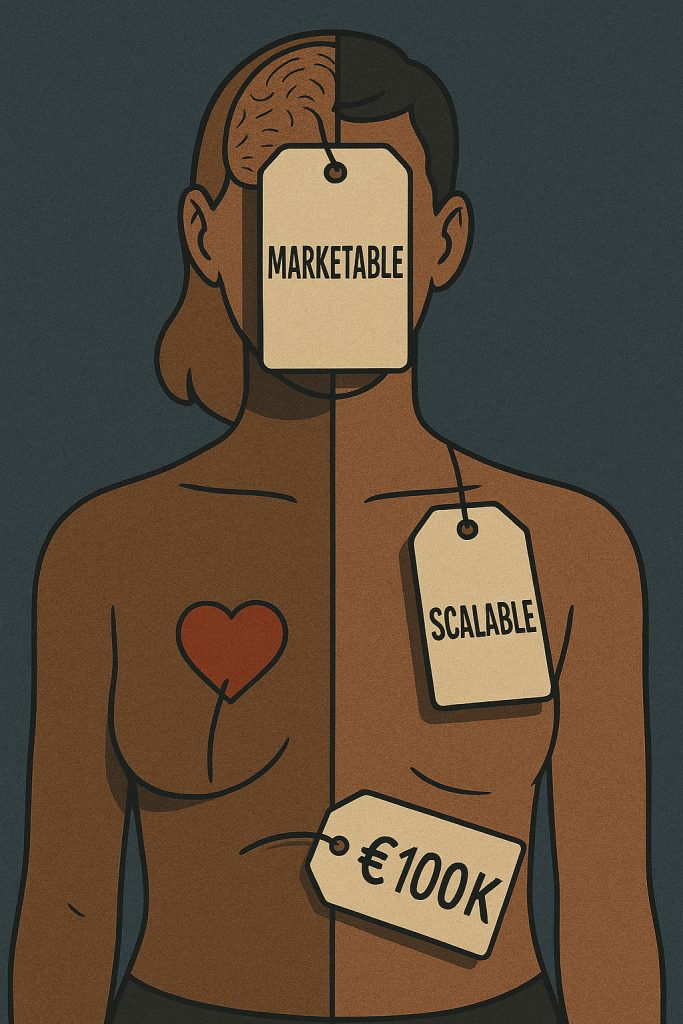
Skin in the Game: The Seeds of Financial Objectification
So, the obsession with appearance didn’t just stop at the mirror — it laid the groundwork for something deeper: the belief that how we are seen determines what we deserve.
In a culture where beauty is often rewarded with access, affirmation, and perceived legitimacy, we’ve internalized a dangerous idea — that our surface is a form of currency.
Thus, when society began to shift from magazines to Instagram, from personal stories to personal brands, it was almost inevitable that the currency would evolve too.
Today, it’s not just about how we look — it’s about how successful we appear.
Status is visual. Wealth is aesthetic. The game is the same — but the scoreboard has changed.
And so, financial objectification emerges not as an isolated trend, but as a logical extension of a long-standing cultural habit:
- Reduce the person to what can be seen.
- Reward those who play the part.
- Ignore the depth beneath the surface.
We’ve simply swapped the body for the brand.
And instead of competing to be beautiful, we’re competing to be “worthy”. But the result is strikingly similar: The rise of performance-based self-worth, fueled by visibility, comparison, and a relentless hunger to be seen as “enough” — in every way.
From Strong to Successful
Where women were told to be beautiful, men were told to be impressive. Where women were shaped by ideals of appearance, men were shaped by ideals of performance. And soon, male identity became another consumer product.
The “ideal man” became muscular, stylish, dominant, rich, and endlessly productive. Status became the male beauty standard.
And performance became the proof of worth.
Comparison, Rebranded as Motivation
What women had been living for decades — comparison, unattainable ideals, and insecurity packaged as empowerment — now came for men dressed in hustle culture:
“Level up or fall behind.”
“Build your empire.”
“Don’t stop until they know your name.”
The male self became a brand — optimized for success, validated by metrics, and stripped of softness.
And just like women chasing beauty, men chasing success found themselves in a loop of not enough.
The Illusion of Status Symbols
Status symbols were once the external proof of internal position — a noble title, land ownership, a seat at a certain table. But in today’s marketplace of appearances, they’ve been democratized — or rather, diluted.
Thanks to our greedy imaginations and even greedier industries, status can now be simulated. A man without real power, influence, or direction can still appear “important” — not by what he’s built, but by what he’s bought.
A luxury watch, designer sneakers, a sleek car — not because they change who he is, but because they suggest he matters. In a culture that confuses aesthetics with achievement, even borrowed status becomes social currency.
This is where the “fake it till you make it” -mentality thrives — not just as a mindset, but as a marketing strategy for the self. When appearance becomes proof of worth, projecting success is often more important than actually achieving it.
From rented watches to borrowed backdrops, the illusion of having “made it” buys time, attention, and perceived credibility. But while the aesthetic might open doors, it rarely sustains real self-worth. It keeps people performing — not growing.
The Music Video Effect
This performance mindset didn’t start with social media — it was rehearsed long before in the stylized worlds of music videos. From the golden age of MTV to modern-day rap visuals, we were shown how to look powerful, wanted, and untouchable — even when the reality was rented. Jets, watches, luxury cars — it wasn’t about ownership, it was about vibe.
We learned early that perception could outperform truth. And now, without realizing it, we’ve internalized the same staging. The director, the star, and the audience are all the same person — curating, polishing, and performing the best version of a self we hope will be enough.
Social media didn’t invent this. It just made it personal.
Today, we mimic the aesthetics of success not necessarily to deceive, but to belong — to feel relevant in a world where looking like you matter often matters more than actually feeling like you do.
From Bodies to Bank Accounts
Social media — originally intended for connection — has become a showroom of curated selves.
Where once the body was the most visible site of comparison, we now see the same logic applied to lifestyle, hustle, and net worth.
What began as physical objectification has morphed into financial self-branding.
But how the hell did we get here?
To understand today’s culture of curated self-worth, we have to look at how advertising — and comparison — evolved over time.
How each new medium deepened the mirror — and widened the gap between who we are and who we think we should be.
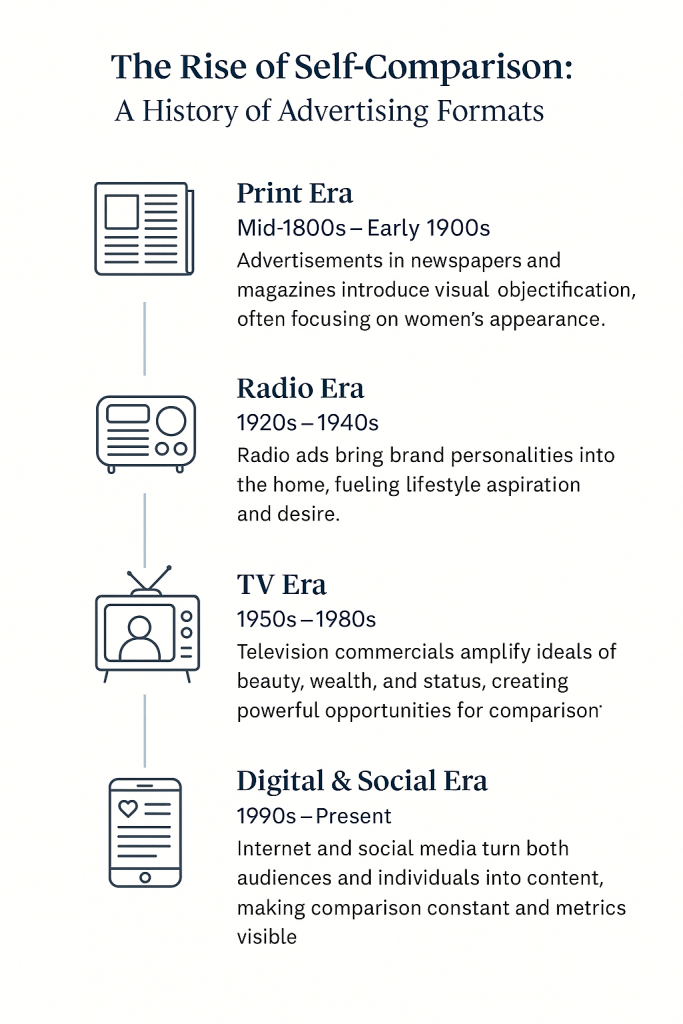
Each new medium didn’t just sell products — it sold personas. And as the formats grew more immersive, so did our entanglement with external ideals. What began as desire for improvement morphed into a deep fear of inadequacy — a fear that now fuels the self- comparison economy we live in.
It looks like motivation — but it often smells like performance.
• Returns dressed as routine.
• Affirmations wrapped in aesthetics.
• Transparency disguised as subtle flexing.
Even our language has shifted:
You’re not just working — you’re “scaling.”
You’re not tired — you’re “grinding.”
You’re not a person — you’re a brand.
In this new economy of identity, you are what you earn. And you are only as valuable as you are visible.
The Comparison Economy
The danger isn’t in ambition — it’s in outsourcing our identity. The more we tie our worth to appearance, visibility or net worth, the more we internalize the belief that we must achieve value before we can feel it.
And the result is corrosive:
- A lingering sense of inadequacy, no matter what we accomplish.
- An inability to rest without guilt.
- A fear that if we stop performing, we’ll stop mattering.
This is the new objectification. And its metrics are masked as motivation.
But performance-based self-worth isn’t growth — it’s a loop. One that exhausts instead of expands.
The Hidden Cost: Mental Health and Stunted Growth
When the line between self-worth and social proof blurs, the inner damage begins.
We chase “high performance” but can’t feel peace.
We check our bank accounts more than our breath.
We hustle, not from purpose, but from fear — of falling behind, of being unseen, of not measuring up.
Even healing becomes a performance:
You’re not just growing — you’re optimizing.
You’re not resting — you’re biohacking.
You’re not reflecting — you’re building a personal brand.
The self becomes a pitch deck.
And somewhere along the way, we lose access to something deeply human:
The right to simply be.
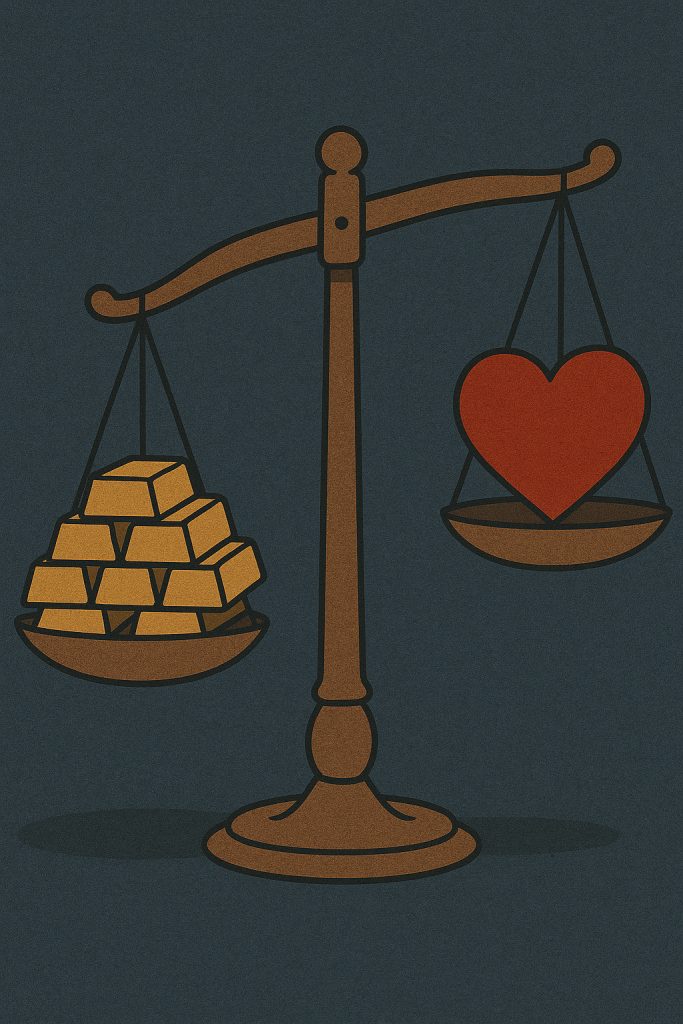
The Legacy Lives On
What began as subtle persuasion became cultural doctrine.
At a young age, women were trained to see their bodies through the eyes of others — to observe themselves constantly, and to measure their worth against ideals they could never fully reach. Men, meanwhile, were taught to measure their value through performance — judged not only by how they looked, but by what they achieved, earned, or conquered.
Today, this same model powers the influencer economy and lifestyle branding. We are still being sold solutions to problems we didn’t invent — just with more polished filters and better algorithms.
This history is not just informative — it’s liberating. Because once we understand how insecurity was manufactured,
we can begin to reclaim our perception, our worth, and our attention.
Reclaiming Real Worth
You are not your income.
You are not your equity, your likes, your metrics, or your brand deals. You are not a before-and-after story waiting to be monetized.
You are a whole, complex, evolving being.
Your worth lives in how you listen.
How you show up when no one’s watching.
How you stay authentic and kind in a world that seems to reward performance and selfishness.
Let’s rewrite the metrics.
Let’s define success by how aligned we are with our values — not how impressive we appear to others.
Let’s build lives rich in integrity, not just income.
Let’s invest in presence, peace, and purpose.
Because the most valuable thing you’ll ever own is not your net worth — it’s a grounded sense of who you are without the performance.
Real Value Isn’t Measured in Dollars or Euros
Your real worth is found in how you live, love, grow, and contribute. It’s the kindness you offer when no one’s watching.
The courage you show when life breaks you open. The way you make someone feel safe just by being yourself.
These are not commodities.
They cannot be traded.
They do not depreciate.
If anything, they compound over time — in joy, meaning, and the quiet confidence that your life matters beyond material markers.
From Self-Objectification to Self-Recognition
Is it time to opt out of the comparison economy?
To stop treating our lives and achievements like performance metrics?
To reject the ridiculous idea that net worth equals self-worth?
Here’s some radical ideas:
- Let your value be felt, not flaunted.
- Build inner equity — in resilience, in purpose, in peace.
- Invest in self-awareness over status.
- Choose depth over display.
Because one day, when the numbers fade, and the audience thins, what remains will be who you became — not what you owned.
You are not a number.
You are not a brand.
You are not a balance sheet.
You are already worthy.
And now comes the choice — not of ambition, but of intention.
The Fork in the Road: Perform or Align
There’s nothing wrong with wanting to grow, achieve, or succeed. But intention matters.
There’s a line — subtle but life-altering — between growing from alignment and performing for approval.
One leads to depth.
The other to depletion.
So ask yourself regularly:
- Am I doing this to connect — or to compete?
- Is this driven by vision — or by fear?
- Would I still be proud of this if no one ever saw it?
Let your reflection be your own — not a reaction to someone else’s highlight reel. Let your worth be rooted — not marketed. Grow to fulfill your potential — not just to impress others or to meet the metrics.
Because you were never meant to be a brand. You were meant to be a human being. And that is already more than enough.
If this article resonated with you or sparked any emotions, don’t miss out on what’s coming next. We’re bringing you more inspiring stories, expert guidance, and fresh perspectives to help you lead a purposeful and balanced life. Subscribe today and be the first to get these enriching articles sent straight to your inbox! And have the best possible day. Be great!
Images: Pixabay.com & Chat GPT
Leave a Reply