
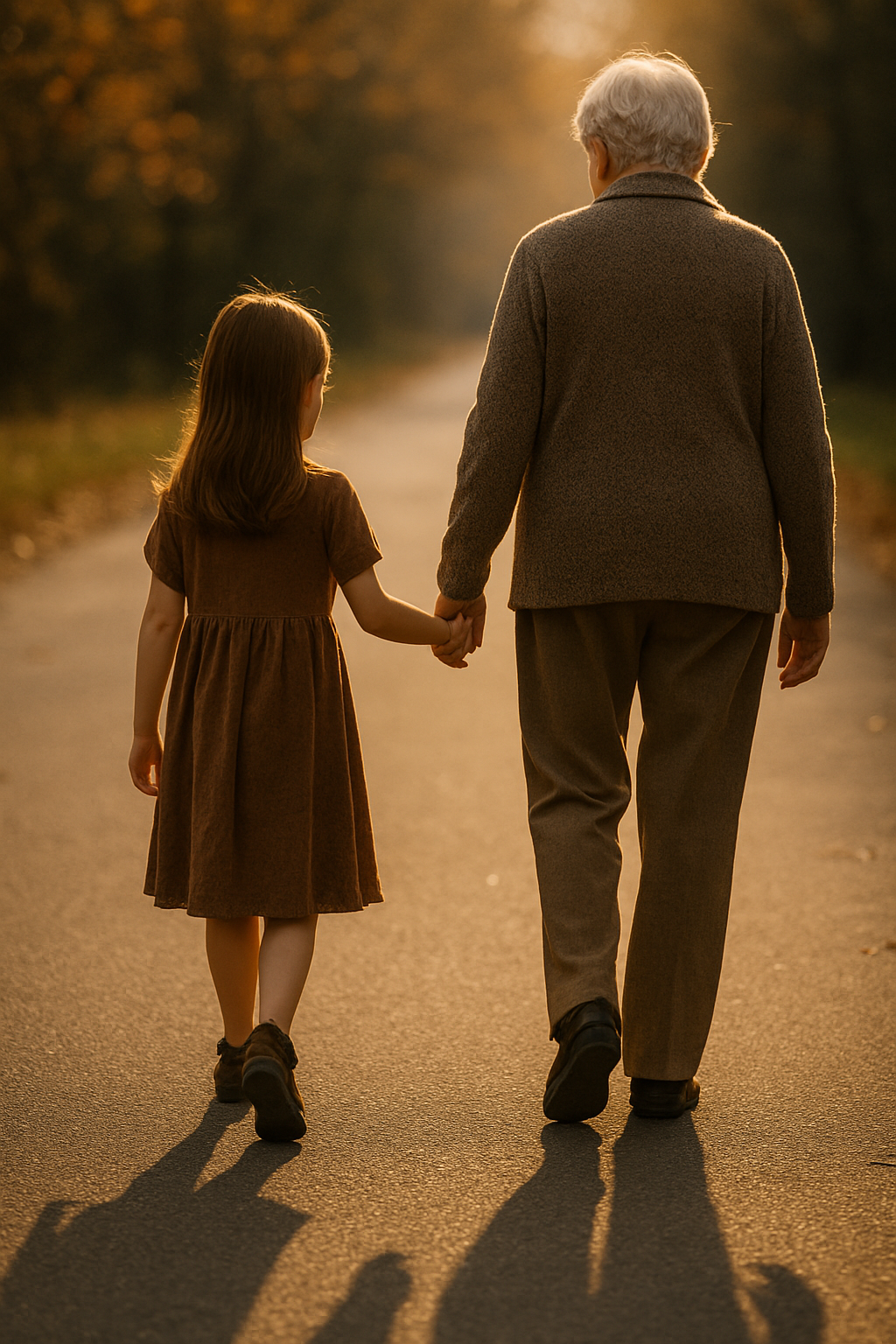
Have you ever wondered what parts of your life are truly yours — and which ones were handed down in silence?
Maybe the anxiety isn’t just yours. Maybe the guilt. The pressure. The way you shut down or overperform. Maybe those started long before you.
Trauma is not always a response to something that’s directly happened to you. Sometimes, it’s what happens around you. Sometimes, it’s what happened before you. You can inherit it without ever witnessing the event — through behaviors, beliefs, silences, and survival patterns.
The Quiet Signs of Inherited Pain
Intergenerational trauma isn’t always loud or obvious. It doesn’t just show up as big, dramatic wounds. Sometimes, it lives in the small, everyday patterns: perfectionism, emotional distance, chronic guilt, the inability to rest, or the quiet panic that comes when things are finally calm.
Intergenerational trauma isn’t just about inherited memories of pain — it’s the unconscious patterns, behaviors, and beliefs passed down through families and cultures as a result of unprocessed trauma.
We all know someone who seems to carry an invisible weight.
Who pushes themselves to exhaustion, never asks for help, keeps it all together — until they don’t.
Maybe we’ve even been that person. Maybe we still are. High-functioning but anxious. Strong but secretly numb. Successful on paper but struggling in silence.
Overperformance Hides Old Wounds
Overperforming often looks like strength. It’s praised, promoted, even envied. But beneath the drive to excel is often a deep, unspoken belief: “If I do enough, achieve enough, prove enough — maybe I’ll be safe. Maybe I’ll be worthy.”
This kind of hyper-independence is a survival strategy. When emotional needs went unmet, when love was conditional, or when chaos ruled, performing became protection. Control became safety. Success became identity.
It’s not ambition — it’s armor.
And the cost? A self that’s constantly managing, rarely resting, and never quite feeling like enough.
It’s not about blaming those who came before us, but about understanding how their survival strategies became our emotional starting points.
It doesn’t always show up in obvious ways — sometimes it lives in chronic anxiety, perfectionism, emotional distance, or the fear of rest.
And most importantly, it’s not a life sentence — it’s an invitation: to feel, to question, to heal, and to choose differently.
Let’s dive deeper, shall we?
The Echoes We Carry
We are born into stories already in motion.
Before we take our first breath, the world has whispered something into our bones — the quiet, often invisible echoes of those who came before us. Their choices, their fears, their silence, and their resilience form the invisible blueprint we inherit. These are the patterns that shape how we love, how we fear, how we cope, and how we see ourselves.
In the 21st century, we’re more connected than ever, yet many of us feel a deep, unnamed weight. We work hard but feel unfulfilled. We seek peace but inherit anxiety. We repeat behaviors we swore we’d avoid. Often, we look inward and ask: Why am I like this? And sometimes, the answer is: Because someone before you was hurting and couldn’t say so.
This is intergenerational trauma — not just a psychological concept, but a lived reality. It’s what happens when pain is passed down like an heirloom, unspoken and unhealed.
But the story doesn’t end there.
This era presents us with a radical opportunity: to recognize, confront, and rewrite these inherited patterns. To become the generation that breaks cycles instead of repeating them. It’s not an easy path, but it is a sacred one. Healing what we didn’t cause is an act of quiet revolution — not only for ourselves, but for those who came before and those who will come after.
We carry echoes, yes. But we also carry the power to transform them.

What we see is only part of the story. Healing means looking beneath the surface.
The Origins: Where It All Begins
To understand intergenerational trauma, we must first look backward — not just into our personal histories, but into the collective stories of humanity.
Trauma doesn’t always begin with us. It often begins in the margins of history books: in the aftermath of wars, in the silence after forced migration, in the grief of lost homelands, in the shadow of colonization, in the quiet desperation of poverty, or in the injustice of systemic oppression. These experiences don’t always get spoken aloud, but they get absorbed. They take root in the nervous systems of those who live through them — and then get passed on, generation by generation.
Survival often required silence. Our ancestors, many of them, couldn’t afford to grieve openly or process their pain. They buried their emotions under duty, work, religion, or cultural codes of toughness and endurance. They did what they had to do to keep going. In doing so, they often handed down a kind of emotional DNA — not just genetic traits, but deeply embedded survival responses: mistrust, emotional numbing, people- pleasing, avoidance, perfectionism, hypervigilance.
Sometimes the traumas were dramatic — genocide, slavery, abuse. Sometimes they were quiet and chronic — neglect, shame, scarcity, emotional absence. Either way, the effects ripple outward, far beyond the original event.
And so here we are — many of us living lives they dreamed of, with more access, freedom, and technology than they ever imagined — and yet, we carry inside us the aftershocks of what they could not name.
Understanding these origins doesn’t excuse harmful behavior. But it gives us context. And context is what turns blame into clarity — the first step toward conscious healing.
How Trauma Travels: The Science and Psychology
It’s one thing to inherit your grandmother’s eyes or your father’s laugh. It’s another to inherit their anxiety, their mistrust of the world, or the deep-seated fear they never spoke of. Yet science now affirms what many cultures have long known intuitively: trauma doesn’t just live in the mind — it lives in the body, and it can be passed down.
This is where biology meets biography.
Epigenetics: The Biology of Memory
Epigenetics is the study of how behaviors and environment can affect how genes work. Researchers have found that extreme stress — such as that experienced during war, famine, or systemic oppression — can leave markers on DNA. These changes don’t alter the genetic code itself, but they do influence how genes are expressed. These epigenetic tags can be inherited, meaning that the descendants of trauma survivors might carry a biological imprint of what their ancestors endured.
In one well-known study, children of Holocaust survivors showed altered stress hormone levels, mirroring those of their parents. Similar patterns have been found among descendants of those affected by slavery, forced displacement, and other collective traumas. Trauma, it seems, can echo across generations not only through stories or silence — but through cells.
Psychological Inheritance: What We Learn Without Knowing
Beyond biology, trauma travels through behavior, language, emotional modeling, and belief systems. A child doesn’t need to be told the world is dangerous if their caregiver lives in a constant state of fear. They learn it through the caregiver’s body language, emotional withdrawal, or mistrust of others.
This is how patterns form:
- Emotional repression gets interpreted as strength.
- Avoidance becomes tradition.
- Shame masquerades as humility.
- Control becomes a form of safety.
Children internalize these signals and adjust accordingly — not out of weakness, but as a form of adaptation. What begins as a survival mechanism in one generation can become an emotional blueprint in the next.
Understanding how trauma travels — biologically, psychologically, culturally — is key. Because once we see the pattern, we can begin to question it. And once we question it, we can begin to interrupt it.
21st Century Symptoms: Recognizing the Patterns
We live in an era of unprecedented connection — yet many feel isolated, anxious, or perpetually on the verge of burnout. We scroll, strive, optimize, and self-diagnose. We build lives that look perfect on the outside, while inside, we’re often navigating quiet chaos.
This isn’t just a byproduct of modern life — for many, it’s the manifestation of inherited wounds we haven’t yet found language for.
In the 21st century, intergenerational trauma doesn’t always show up as visible suffering. It shows up in subtler, socially acceptable forms: chronic stress, emotional detachment, overachievement, disconnection, or the inability to rest without guilt.
Overwhelming Loneliness and Struggle, Rebranded as Hyper-Independence
We admire those who “do it all” — the single mother who never asks for help, the career woman who’s always in control, the friend who never breaks down, never complains, never lets on that anything is wrong.
But what if strength is sometimes just a mask for silence? A socially acceptable way to say: I don’t need anyone — because needing always led to disappointment.
What if hyper-independence isn’t confidence, but trauma in disguise?
One of the most recognizable expressions of intergenerational trauma is the inherited hyper-independence passed from mother to daughter — not as a conscious lesson, but as a survival blueprint.
This pattern often traces back to post-war generations, when many women were left to raise families alone after the loss or absence of men.
Out of necessity, they became providers, protectors, and emotional anchors — often without support. This resilience, later fueled by feminist movements, was culturally reframed as empowerment — and rightfully so. But in many cases, the trauma and isolation underneath were never addressed.
Even if the mother herself no longer struggled in the same way, she may have absorbed and continued the emotional armor inherited from her own mother.
And so, the pattern continued — passed down quietly across two or more generations, turning survival instincts into default behavior, and leaving many women torn between strength and softness, freedom and connection.
For many, self-reliance wasn’t a choice — it was a necessity. Needing help once led to rejection. Expressing emotion brought shame. Depending on someone became dangerous.
So they learned to depend only on themselves.
Look closer: that “strong, independent woman” — is she thriving, or surviving? Is she fulfilled, or just functioning? Is she making empowered choices — or unconsciously replaying the role modeled by a mother or grandmother who learned to equate love with sacrifice, and silence with strength?
Perhaps she feeds her children with the government’s spoon while feeding herself with stories of how doing it alone is noble — not realizing she’s inherited a script that glorifies struggle and punishes vulnerability. Perhaps she believes she chose this life. Maybe, in part, she did. But often, what looks like empowerment is actually endurance dressed up in pride.
Hyper-independence can feel like control. But often, it’s grief with no place to go.
When Work Becomes a Survival Strategy
We all know someone who’s constantly working — first in the office, then at home, then in their thoughts. Maybe we’ve even worn that badge ourselves. But workaholism often has roots much deeper than ambition.
For many, the compulsion to overperform was planted early — watching a parent tirelessly hustle during financial hardship, doing whatever it took to keep the lights on, food on the table, or a family afloat. As children, we may not have understood the stress, but we felt the tension.
We watched our caregivers burn out, and learned: being still is dangerous, rest is lazy, love must be earned through output. So we internalized the grind as love, the hustle as identity. What starts as survival can become a lifelong habit of self-abandonment dressed up as success.
This is how intergenerational trauma hides in plain sight — not only through what’s said or done, but in what’s modeled, what’s normalized, and what’s never questioned. The result? Adults who don’t know how to slow down, feel guilty for resting, and confuse self-worth with productivity.
Numbing Instead of Feeling: The Silence Behind the Bottle
Some inherited wounds don’t scream — they stay quiet, hidden in the routines of everyday life. Passed down not in words, but in glances, habits, and avoidance. Think of the silent father who never raised his voice, but also never opened his heart. The one who sat at the kitchen table each night with a drink in hand, staring into nothing — not angry, just absent. You may have never heard his pain, but you felt it in the air, in the heaviness of his presence, and the emptiness between his words.
For many, substance use becomes a generational method of self-soothing — a way to manage what was never allowed to be expressed. Emotional suppression becomes the norm, and alcohol or other substances fill the role that emotional tools never did. When expression is unsafe, numbing feels like survival. Children who grow up around this internalized silence often absorb it, repeating the pattern — not because they’re weak, but because it’s what love and coping looked like. Over time, the bottle becomes less about escape and more about inherited memory — a generational whisper that says: “this is how we survive feelings we don’t have the words for.”
And here’s the deeper truth: the substance doesn’t always stay the same. Maybe your father drank in silence, but you reach for sleeping pills, or overeat when no one’s watching. Maybe your grandmother coped with life’s weight through quiet cigarettes by the window — and you smoke weed at night to disconnect, to quiet the noise, to finally exhale. The specifics shift, but the survival script often stays the same. These are patterns passed down without language — coping mechanisms inherited through observation, not intention. Recognizing this isn’t about blame. It’s about finally becoming conscious of what you were never taught to question — and choosing something different.
Common Symptoms and Patterns
Many modern behaviors we normalize are actually deeply rooted in inherited survival strategies:
- Hyper-independence: A learned belief that vulnerability is dangerous or shameful.
- Perfectionism: A shield against criticism, often rooted in childhood unpredictability or conditional love.
- People-pleasing: A way to avoid conflict or abandonment in environments where emotions were unsafe.
- Emotional numbing: A defense mechanism against overwhelming feelings, passed down from those who were never allowed to feel.
- Mistrust in systems or intimacy: Inherited from generations who experienced betrayal by institutions, authority figures, or even their own caregivers.
These aren’t personality quirks — they’re adaptations. They once helped someone survive. But now, unexamined, they become prisons we don’t know we’re living in.
Technology: Mirror and Mask
The digital age amplifies these struggles. Social media can be a space of healing — where stories are shared, cycles are named, and therapy is normalized. But it can also be a mirror of distortion — encouraging comparison over connection, performance over presence.
Algorithms reward curation, not complexity. We become performers in our own lives, smiling through inherited ache.
Burnout becomes a badge of honor. Hustle culture becomes a coping mechanism. Disconnection becomes the norm.
But beneath the noise, something powerful is happening: More and more people are asking deeper questions.
Why do I feel this way?
Why do I keep repeating the same patterns in love, work, parenting? Why do I struggle with rest, trust, or softness?
And those questions — tender, persistent, brave — mark the beginning of a break in the cycle.
Waking Up: The Moment of Recognition
Healing doesn’t always begin with a breakthrough. Sometimes, it begins with a breakdown.
A sleepless night. A failed relationship. A panic attack that comes out of nowhere. A child’s tantrum that mirrors your own inner world. A moment of success that feels empty.
Then suddenly, the questions arrive — uninvited, but necessary:
Why do I keep doing this?
Where did I learn to love like this?
Whose voice is that in my head?
What am I really carrying?
This is the awakening — not the end of the journey, but the threshold.

The Path forward may be unclear, but it´s yours to walk.
It’s when we realize our behaviors are not random flaws, but inherited responses. That survival is not the same as living. That strength without softness is just another form of armor.
And that some of what we’ve always called “normal”… was never natural.
The Weight of Awareness
With awareness comes grief.
Grief for the childhood you never had.
Grief for the tenderness you were taught to suppress.
Grief for your mother, your father, your lineage — for what they endured without healing.
It’s a quiet mourning for what wasn’t safe to name — the unspoken rules, the silence after slammed doors, the fear tucked between the lines of every conversation.
But this grief is sacred.
It’s not regression — it’s reclamation.
Grief means you’ve stopped running.
It means you’re finally telling the truth.
Not Blame — But Ownership
This awakening isn’t about blaming those who came before us. It’s about becoming conscious of the emotional inheritance we carry.
It’s realizing:
- That your fear of rest isn’t laziness — it’s a trauma response.
- That your avoidance of intimacy isn’t coldness — it’s protection.
- That your constant need to perform isn’t ambition — it’s a learned way to be loved.
Once you see these patterns, you can’t unsee them. And that’s the point.
Because once you see them, you can choose differently.
The First Cracks in the Wall
The first act of healing is not fixing — it’s noticing. It’s the moment you pause before reacting.
The second you choose honesty over habit.
The breath you take before repeating a cycle.
It’s small. It’s quiet. But it’s radical.
That pause? That’s your power.
That pause is your ancestors, resting in you.
Healing Paths: Tools for Transformation
Awareness is only the beginning. Healing is the work. And it is work — not a weekend retreat, not a quick-fix podcast, not an inspirational quote on your feed. It’s the slow, layered, nonlinear journey of coming home to yourself after generations of emotional exile.
But the beauty of healing today is this: you don’t have to do it alone.
We live in a time where tools, communities, and language for healing are more available than ever before. And while there’s no one-size-fits-all map, the invitation is universal: to stop surviving on inherited scripts and start writing new ones — with intention.
Therapy and Mental Health Support
Therapy is not just for when you’re in crisis. It’s a space for truth-telling, untangling, remembering, and reparenting. Whether it’s talk therapy, EMDR, somatic work, or Internal Family Systems, therapy helps you make sense of stories you didn’t even know were shaping you.
It’s where suppressed grief gets a voice. Where shame gets questioned. Where compassion returns.
And if you can’t access therapy, support groups, community circles, and mental health education can offer mirrors — showing you that your pain has context, and your healing has companions.
Somatic Healing: Listening to the Body
Trauma lives in the body. And so must the healing.
For those who learned to dissociate, override, or numb, practices like yoga, breathwork, TRE (Tension & Trauma Release Exercises), and somatic experiencing help reconnect you with your own body — not as a battlefield, but as a home.
The body remembers. But it also releases.
When language fails, the body speaks.
And when we finally listen — we begin to heal from the inside out.
Cultural and Ancestral Reconnection
For many, healing is not just psychological — it’s spiritual and cultural.
Reclaiming rituals, language, songs, or traditions disrupted by colonization, migration, or silence can restore a deeper sense of self and belonging.
This work may include learning your family history, exploring ancestral practices, or simply asking elders questions they’ve never been asked.
It’s how we turn disconnection into continuity.
We don’t just inherit trauma. We inherit resilience, too.
Creative Expression and Storytelling
When there are no words, make art. Write. Dance. Paint. Sing. Move.
Creative expression doesn’t just decorate pain — it transforms it.
In giving shape to the unspeakable, we reclaim power over the story.
Storytelling — whether through journaling, poetry, or conversation — is how we stop being haunted and start becoming authors.
Conscious Pattern-Breaking: The Daily Work Healing is not just inner work. It’s outer choices.
- Setting boundaries where none existed before.
- Saying no — without guilt.
- Apologizing — without deflecting.
- Choosing partners who feel safe instead of familiar.
- Resting without needing to earn it.
These acts may seem small, but they are radical in families where these behaviors were never modeled. Every time you choose a new pattern, you’re rewriting the script — not just for yourself, but for the lineage.
You become the living evidence: The cycle can end here.
Bridging the Generations: Conversations That Heal
Healing intergenerational trauma isn’t just an inward journey — it’s a relational one.
At some point, the work draws us back into the family systems, cultures, and communities we come from. This can be the most challenging part of the process — but also the most powerful.
Bridging generations means daring to bring language to what was once silenced.
It means choosing connection over avoidance, empathy over blame.
It’s about meeting the people who raised us — or honoring their memory — with new eyes: not to excuse harm, but to understand the context in which they too were shaped.
Starting the Conversation
These conversations rarely begin with confrontation. They start with curiosity. Simple, open-ended questions like:
- “What was it like for you growing up?”
- “What did love look like in your family?”
- “What were your parents like?”
These invitations can unearth histories you never knew — and allow older generations to share parts of themselves they may have buried deep.
What you hear may bring pain — but also unexpected tenderness. You may discover that those who seemed distant were themselves carrying burdens too heavy to speak of.
Rewriting the Family Narrative
Every family carries a story — a myth — about who they are, what they value, what they fear.
Healing asks us to examine that myth and, where needed, rewrite it.
It means acknowledging cycles once denied — addiction, abuse, emotional suppression. It means telling truths younger generations deserve to hear.
It means creating new rituals — rituals of care, celebration, and grief — that replace silence with connection.
Honoring Without Idealizing
Bridging generations doesn’t mean romanticizing the past.
It means holding complexity — seeing our ancestors as whole, flawed, brave, traumatized, and resilient.
It means honoring what they gave us — while releasing what no longer serves us.
Some families may be ready for these conversations. Others may resist. Healing doesn’t always require reconciliation — but it does require clarity, and sometimes boundaries.
Forgiveness can be powerful. Distance can be necessary.
Becoming the Bridge
To do this work is to stand between what was and what could be — To become a living bridge.
We inherit not only pain, but the strength to transform it.
In bridging generations, we don’t erase the past — We give it voice.
And in doing so, we create the possibility of a future rooted not in repetition, but in renewal.
The Future We Create
Healing intergenerational trauma isn’t just about breaking cycles — it’s about building something new.
Every time we choose awareness over autopilot, empathy over reactivity, truth over silence — we craft a different legacy.
We become architects of emotional environments where safety, honesty, and connection can thrive.
In doing so, we become what many of us never had: cycle-breakers, culture-shapers, and ancestors in training.
Becoming Good Ancestors
The choices we make today ripple forward in ways we may never fully see.
Future generations will feel it — in how they are spoken to, held, and allowed to express themselves.
We plant trees whose shade we may never sit under.
To be a good ancestor isn’t to be perfect.
It’s to be conscious.
It’s to ask hard questions and make courageous choices that shift the course of a lineage.
It’s to show up — again and again — with integrity, even when no one is watching.
From Individual Healing to Collective Transformation Healing is deeply personal — but never just individual.
When we heal, we become more compassionate partners, present parents, grounded leaders, and engaged citizens.
Imagine a society where emotional literacy is taught alongside math, where rest is valued as much as productivity, where collective grief is held with as much care as individual success.
This isn’t utopia — it’s a possible future, born from what we choose to practice now.
Cultural change doesn’t come from the top down.
It happens in living rooms, therapy sessions, family dinners, classrooms, and communities — one honest conversation at a time.
We are not doomed to repeat the past. We are capable of reimagining it.
Conclusion: The Courage to Heal
Healing intergenerational trauma is not the work of a single day — or even a single lifetime.
It’s the slow, sacred labor of remembrance, redefinition, and repair.
It’s messy and nonlinear.
It asks us to sit with discomfort, grieve what was lost, and imagine what’s possible.
It requires courage — not the loud kind, but the quiet, consistent kind. The kind that shows up when no one is applauding.
The kind that breaks cycles in silence.
To do this work is to say:
It ends with me — and it begins with me.
To feel what others suppressed.
To name what others avoided.
To choose what others couldn’t.
To love in ways that once felt impossible.
This is not a burden. It is an honor.
You are not just healing for yourself. You are healing for those who never got the chance. You are creating space for future generations to live with more ease, joy, and freedom.
Every time you set a boundary, speak a truth, rest without guilt, or offer yourself compassion — you are doing revolutionary work.
You are not broken. You are breaking open.
And in that opening, a new legacy begins — Not of pain repeated, but of healing remembered.
Your Turn: Small Questions, Big Shifts
If you’ve made it this far, chances are — You are the cycle-breaker.
You do have what it takes to face your unconscious patterns and rewrite the script.
No, it’s not always dramatic.
Sometimes it starts with a small shift.
A question. A pause. A choice that doesn’t match the pattern.
So if you’re ready to start disrupting the default, here’s something to sit with:
- When was the last time you noticed an unconscious behavior in your day-to-day life — something that didn’t align with who you want to be?
Maybe you pulled away from someone you love when you needed connection most.
Maybe you dismissed a compliment, avoided rest, or said “yes” when your body screamed “no.”
Or maybe it was subtler — a fleeting thought, a quiet pattern, an old defense kicking in. Did you notice it?
- What did you do with that insight? Did it drift away with the day, or did you gently park it in your personal “awareness database,” a place where those insights can quietly raise flags next time the pattern shows up?
- And if you know your blind spots run deep — have you considered asking someone you trust (a friend, a partner, a colleague) to gently call you in when you’re drifting back into old patterns?
Sometimes, the most healing mirror is a kind, outside eye.
Because healing isn’t about never messing up.
It’s about noticing sooner. Choosing differently. Trying again.
You’ve got this. Go get ’em, tiger.
The past may echo — But you choose the volume from here.
Images: ChatGPT
Enjoyed this article or felt moved by its message? Stay connected for more thought-provoking content! Get ready for inspiring stories, expert tips, and new insights on living a balanced and fulfilling life. Subscribe now to receive these valuable articles delivered directly to your inbox! Have an inspiring day, and keep becoming your best self!
Leave a Reply