
There’s a reason we love them.
The Joker. Tony Montana. Tyler Durden. Henry Hill. Nicky Santoro.
They walk through fire, say what no one else will, and take what they want. Unapologetically. They are unfiltered. Untouchable.
But here’s the twist. They aren’t free.
They’re trapped—by their rage, their loneliness, their pain. And while we cheer them on from the couch, we don’t always notice what they’re really teaching us about manhood.
As kids, drawn in by the emotional weight and the cool charisma of these characters, we often miss the deeper cautionary message—and instead, let their quotes, attitudes, and actions subtly shape how we think, speak, and behave.
The Seduction of the Anti-Hero
The anti-hero offers an escape.
He breaks rules. He defies the system. He refuses to be told who he should be.
For young men who feel unheard, unseen, or powerless, these characters become more than entertainment—they become archetypes. Blueprints.
And that’s where the danger begins.
Because when we internalize a broken blueprint, we build a broken foundation.
Pop culture is full of icons, “legends” that look powerful—but are actually broken. In this piece, we’ll break down why the characters we idolize might be shaping us in ways we don’t even realize… and how to flip the script.
Let’s be clear—these are some of the most iconic, masterfully crafted films ever made. Visually stunning, emotionally charged and unforgettable in their storytelling, that holds up decades later. There´s a reason they´re still being watched, quoted and adored. They’ve earned their place in cinematic history for a reason. But that’s also what makes their influence so powerful—and potentially so subtle. Because when the craft is flawless, the message can sneak past our defenses.
The Rewatch Effect: When Fiction Starts to Feel Familiar
Many of these films aren’t just watched once—they’re lived with. Rewatched through the years like comfort classics. Quoted like scripture. Their most iconic lines memorized by heart, just like the chorus of a favorite song. And the more familiar they become, the deeper their influence can run. Especially when first experienced in our formative years, these characters and their worlds can slip past our filters—shaping not just our taste in movies, but our beliefs about power, success, and identity itself.
The Joker: The Chaos We Watch but Don´t Want to Become
Let’s assume nobody wants to identify with the Joker while watching the movie. We just consider it perhaps entertaining…or we think we do. The truth is, his chaos can be hypnotic.
He walks through life with no rules, no limits, and no apologies. And even if we’re not laughing with him, there’s a strange power in watching someone so unhinged—and so free. But what we forget is: the Joker isn’t free. He’s fractured. Alone. Broken beyond repair. That’s not a role model; that’s a warning.
Scarface Didn’t Win—And Neither Did the Others
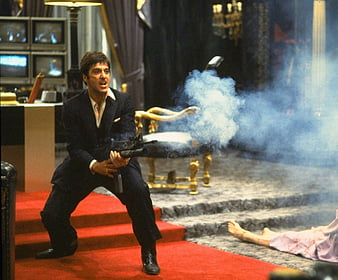
Let’s be honest: Scarface isn’t a success story. It’s a cinematic tragedy. A man who gains the world, only to lose himself completely. And he’s not alone—none of these men walk away whole.
Tony Montana: Glamour That Distracts from the Downfall
Tony Montana in Scarface? A man who climbs to the top by any means—only to become paranoid, isolated, and die in a hail of bullets, addicted to his own ego. But along the way, there’s a moment that throws us off: he refuses to kill a woman and two children.
It’s a brief flash of morality in a violent spiral—and it’s exactly that kind of moment that can bypass our inner filters. Suddenly, we’re sympathizing. Justifying. Even idolizing. And the rest of his recklessness slips in unnoticed.
He starts with ambition and ends in self-inflicted exile. His empire crumbles because he never learned restraint. Yet somehow, he’s still on posters, playlists, and IG stories. Why?
Tyler Durden: The Cult Leader in Cool Clothing
Tyler Durden, in Fight Club? Cool haircut. Killer quotes. A whole philosophy of rejecting consumerism and embracing chaos. But here’s the twist: he’s not even real. He’s a hallucination—an ego-fueled alter ego born from repression and pain.
At first glance, he seems like freedom incarnate: fearless, bold, untamed. But when we look closer, we realize Tyler isn’t healing anything. He’s running from everything. He doesn’t build—he destroys. And in the end, his world collapses because the foundation was never solid to begin with.
For a generation of young men feeling lost or numb, Tyler’s rebellion feels like a way out. But in truth, it’s a shortcut to nowhere. Anger without direction. Power without peace.
Henry Hill: The “Nice Guy” Criminal You Almost Root For
Henry Hill, from Goodfellas? He had the cars, the cash, the clubs, and the thrill—until it all came crashing down. When things got real, the “wise guy” who once seemed untouchable flipped. He ratted out his friends and ended up hiding in suburbia as a snitch, his dream life reduced to instant coffee and regret. That’s not power. That’s exile.
Henry Hill’s story in Goodfellas is seductive because he seems more relatable than ruthless. He doesn’t pull the trigger, often distances himself from the most violent acts, and even shows flashes of conscience—like trying to stop a murder or caring for his family. But beneath that charm lies a man deeply entangled in crime, addiction, and betrayal. His downfall isn’t just about becoming a snitch; it’s about losing his identity. Once a man who ‘always wanted to be a gangster,’ he ends up in witness protection, lamenting a life reduced to suburban anonymity.
The tragedy is that even in exile, he misses the thrill of his criminal past—revealing how deeply the lifestyle had consumed him. And the most sobering part? This isn’t fiction. Henry Hill was real, and so was the betrayal, the paranoia, and the slow unraveling that came with it. Henry Hill was indeed an associate of the Lucchese crime family and participated in the infamous Lufthansa heist at JFK Airport in 1978. He later became an FBI informant, leading to numerous convictions.
Nicky Santoro: Ego Unleashed — The Cost of Unchecked Violence
Nicky Santoro in Casino? Brutal, loud, untouchable—until he wasn’t. The ultimate tough guy, feared by everyone. But in the end? He was ambushed and beaten to death with baseball bats, thrown into a hole like an animal by the very world he once controlled. No honor. No empire. Just blood in the dirt.
Nicky Santoro in Casino is the embodiment of unrestrained aggression. His reputation for retaliating with escalating violence—“You beat Nicky with fists, he comes back with a bat”—makes him both feared and uncontrollable, but Nicky doesn’t live by a code. He lives by impulse and ego.
One of the clearest examples is when a man insults him during a casual night out. Nicky doesn’t respond with words or a warning—he grabs a pen from the table and stabs the guy in the throat in front of everyone. It’s not about defense or strategy. It’s pure ego. His pride gets poked, and he erupts. The violence is instant, personal, and completely unhinged.
There’s no discipline in his power—only chaos. And in the end, that chaos turns on him. Nicky doesn’t go out in a blaze of glory. He’s beaten with baseball bats and buried alive next to his own brother—slaughtered like an animal by the very people he once tried to control. Nicky’s story serves as a grim reminder that a legacy built on fear is both unstable and self-destructive.
These men weren’t kings. They were cautionary tales.
We idolize their rise, but we ignore their fall.
Because we confuse domination with empowerment. Real power doesn’t need a mountain of cocaine and a pile of bodies to feel complete.
Broken Doesn’t Equal Brave
These characters may entertain us—but they shouldn’t define us. Because real strength isn’t chaotic or cruel. It’s grounded, patient, and self-mastered.
These films are more than just entertainment—they quietly shape how we think about power, masculinity, and identity. These characters captivate us with their defiance and charisma, but beneath the surface lies a cautionary tale.
Their stories remind us that true strength isn’t about domination or rebellion—it’s about integrity, self-awareness, and the courage to face one’s own vulnerabilities.
These aren’t role models and yet, as kids we tend to take them as such. They’re warning signs dressed in cool jackets.
As we revisit these iconic films, let’s not just admire the anti-heroes; let’s learn from their downfalls.
Why We Idolize the Unstable
We’re drawn to these men because they reflect parts of us we haven’t healed or, in some cases, even grown into.
Anger. Rebellion. Disconnection.
We want to believe that embracing the chaos will make us powerful. But in reality, it just makes us more lost.
The characters we think are strong are often just loud.
They don’t represent freedom—they represent what happens when you don’t know how to carry your pain.
Real Strength is Quiet, Consistent, and Boring (in a Good Way)
There’s nothing cinematic about setting boundaries, keeping promises, or staying calm under pressure.
But that is real strength. That’s the kind of power that builds something lasting.
No dramatic monologues. No breaking windows. No burning it all down.
Just a man who knows who he is—and doesn’t need a body count or a broken world to prove it.
What do you think—could part of the reason today’s youth seem so loud be traced back to the influence of Hollywood?
Years of iconic characters making their point while drunk, furious, high on drugs—or simply extremely arrogant—might’ve planted deeper seeds than we realized. Maybe some of us learned to mimic that energy, thinking volume equals confidence… when in truth, the quietest one in the room is often the most comfortable in his own skin.
Or is it simply a natural part of growing—searching, shaping, and trying on different identities until real confidence quietly arrives?
Flip the Script
The real strength we should be celebrating isn’t the kind that self-destructs—it’s the kind that self-masters. The men we admire should be whole, not hollow. Confident, not chaotic.
Real role models don’t burn the world down to feel seen—they build something better. Quietly. Consistently. And with the kind of presence that doesn’t need a spotlight.
Coming soon:
“The Humble Blueprint: Rebuilding Strength Without the Ego Trip”
A look at real-world male mentors, creators, and quiet powerhouses who are redefining what success and respect look like in 2025.
If you liked this article or it managed to rouse emotions of any kind, stay tuned for our upcoming insightful articles. Don’t miss out on inspiring stories, expert advice, and fresh perspectives on creating a fulfilling and balanced life. Subscribe now to be among the first to receive these enriching articles straight to your inbox! Make today your best one yet.
Leave a Reply